




shape shape2 shape3 shape4
home // blog

Industry news

Hidden Role of Window Mechanisms in Noise and Weather Control

The Hidden Importance of Window Operating Mechanisms

Homeowners love talking about glass types and frame colors when they pick new windows. What they usually forget is the hardware that actually opens and closes the thing every day. That crank, track, or hinge decides if you get a room full of fresh air on a summer evening, or if cold drafts sneak in all winter. Get it wrong, and you end up shoving furniture around just to open the window, or listening to traffic noise you thought you paid to keep out.

PAVIDA: Customized Excellence in Aluminum Windows

PAVIDA builds aluminum windows and doors, start to finish, in our own shop. We borrow the best ideas from German window systems, but keep the pricing realistic. Everything we ship is made to last twenty years or more, lock tight, save on power bills, and look exactly the way the customer sketched it.

The Casement Mechanism: Superior Sealing and Maximum Crank-Out

Functionality: Unmatched Ventilation and Compression Sealing

Turn the handle on a casement, and the whole sash swings out like a door. Nothing else comes close to fresh air—the entire opening is free. On a breezy day, the sash actually scoops the wind and pushes it straight into the room. Close it, and the same handle pulls the sash hard against thick rubber gaskets. That compression is why casements laugh at driving rain and strong wind.

PAVIDA Spotlight: The 108 Thermal Break Series

The 108 Series takes everything good about casements and makes it even better.

Double thermal-break profiles with extra-wide PA66 nylon strips stop heat from jumping across the frame. Add multi-cavity construction and 5+20A+5 mm argon-filled double glazing, and the window keeps the bedroom cool in summer and warm in winter without the AC or heater working overtime.

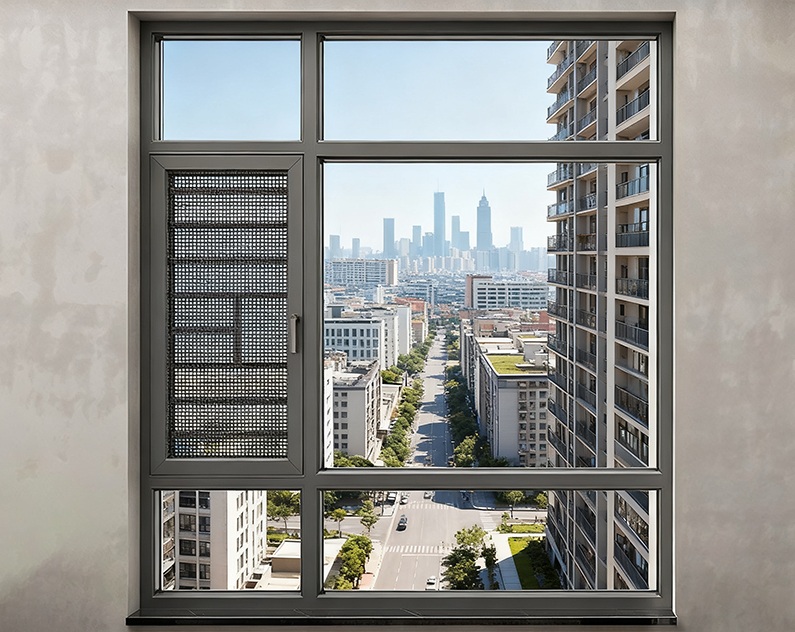
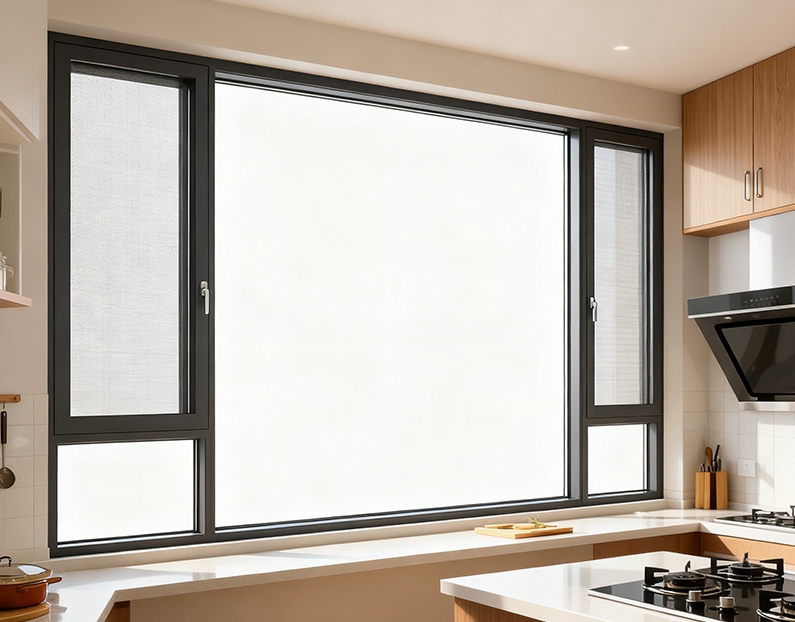
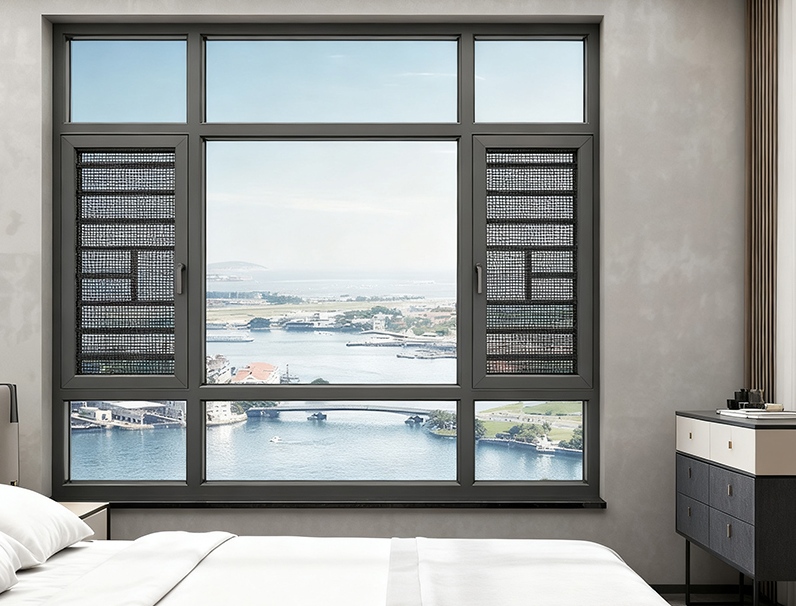
For security, we use heavy multi-point locks that grab the frame in four or five places. Try kicking one in—it’s not happening. A tough 304 stainless diamond mesh screen keeps both burglars and mosquitoes out, and it’s built right into the frame so you never have to wrestle with a separate screen.

Most customers pick the inward-opening with the top-tilt option. Crack it a few inches at the top for safe ventilation on rainy days, or swing the whole sash in and wash the outside glass while standing on the carpet.


108 Series Thermal Break Casement Window with Mesh

The Sliding Mechanism: Space Efficiency and Panoramic Views

Functionality: Sideways Glide and Zero Clearance

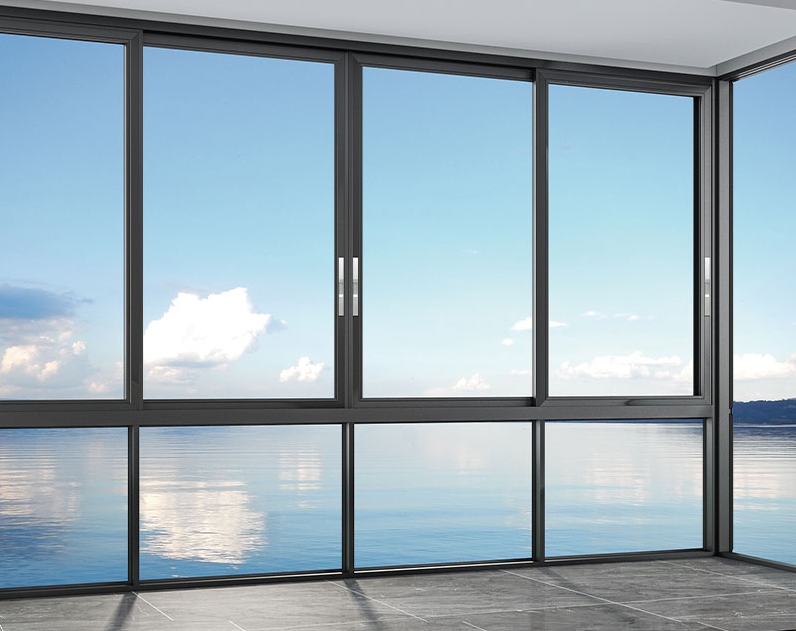
Sliding windows don’t swing—they roll left or right on a track. That means zero space wasted inside or out. Put the couch two inches from the glass and still open the window all the way. The only downside is you can only open half the window at once, but in tight apartments or narrow balconies, that’s usually plenty.

PAVIDA Spotlight: The 120 and Slim-Frame Series

The 120 Series is built for people who want the wall to disappear.

Frames are made from 6063-T5 alloy—strong, straight, and naturally rust-proof even near the ocean. Stainless-steel rollers and quiet tracks let a ten-year-old open a three-meter-wide panel with one finger. Multi-point locks and anti-lift blocks keep it shut tight when you want it shut.

Sightlines on the slim versions drop to barely an inch. From the sofa, you see the garden, not aluminum. Thermal breaks and thick double glazing (often 5+12Argon+5 mm) keep the noise down and the heat where it belongs. Customers near busy streets tell us the difference is night and day.

Advanced Opening Systems: Folding, French, and Louvre Windows

Folding Windows: Maximizing Opening Area for Versatility

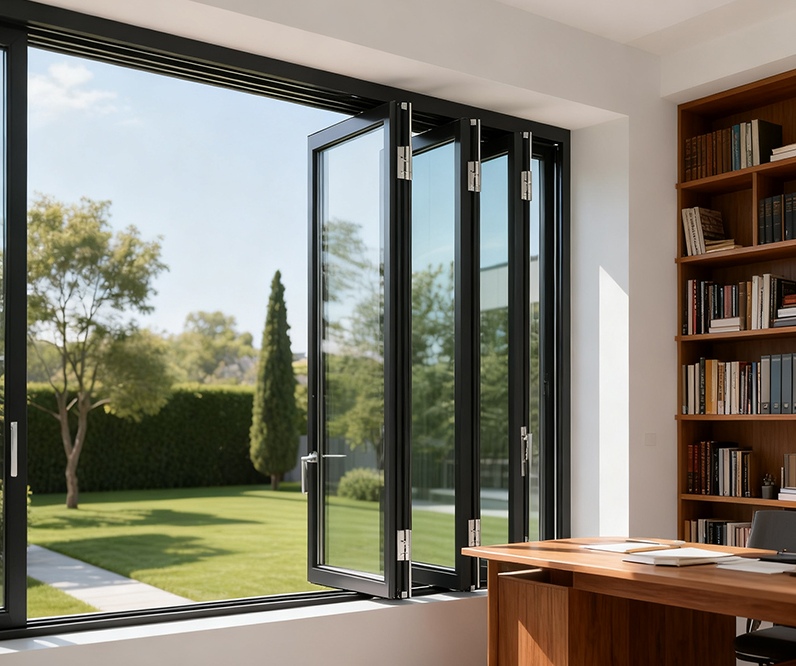
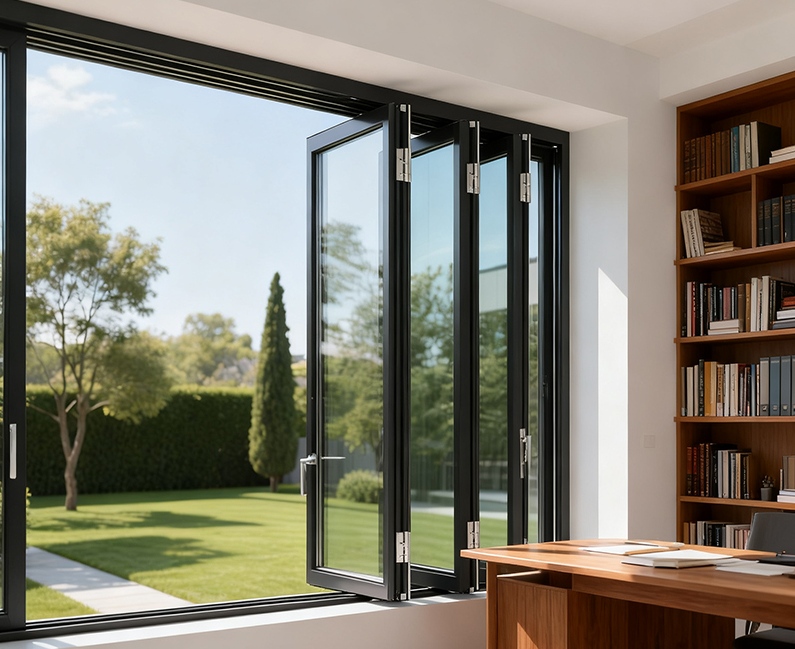
The Aluminum Left-Right Double Sash Folding Glass Window folds flat to one side like an accordion. Open it, and suddenly the kitchen counter becomes a pass-through to the deck. Panels stack tightly so they hardly take up any room when open. Closed, the thermal-break frames and insulated glass seal just as well as any fixed wall.


Aluminum Left-Right Double Sash Folding Glass Window

French and Louvre Styles: Aesthetics and Controlled Airflow

  • French Casement Windows

The Aluminum Thermal Break French Soundproof Casement Window is basically two casements that meet in the middle with no thick bar between them. You get the same tight seal and easy cleaning as regular casements, but the view is cleaner, and the look feels more upscale—great for living rooms and villas.

  • Aluminum Glass Louvre Windows

Louvres use adjustable glass blades instead of one big sash. Turn the handle, and every blade tilts together. You control exactly how much air and light come in, block direct sun at noon, or shut tight when it rains. The blades are framed in tough aluminum with a baked-on finish that won’t peel.

Matching the Mechanism to Your Home’s Needs

Selecting Based on Security, Noise, and Climate

  • Want the quietest room and the toughest break-in protection? Pick casements—108 Series drops outside noise 35–40 dB and locks like a vault.
  • Short on floor space or chasing big views? Go sliding—120 Series gives you a glass wall look without eating patio room.
  • Need to open the whole wall for parties? Folding or French casements are the answer.
  • Just want fresh air without staring at neighbors? Louvres let you dial it in.

The Customization Edge of PAVIDA Windows

Pick any style, and we still let you choose the color—matte black, champagne, wood-grain, whatever matches the house. Glass can be clear, tinted, laminated for extra quiet, or low-E for sun control. Opening direction, handle style, even the mesh color—we build it your way, no extra charge for reasonable changes.

Conclusion: Investing in Enduring Performance

Windows aren’t just holes in the wall. The right operating hardware turns them into something you enjoy using every day. Casements like the 108 Series give you fresh air and dead-quiet rooms. Sliders like the 120 Series make small spaces feel huge. Whatever you pick from PAVIDA, you get real 6063-T5 aluminum, proper thermal breaks, and locks that actually work. Match the mechanism to how you live, and the windows will still look and work great long after cheaper ones have warped, stuck, or started leaking.

FAQ

Q: Which PAVIDA window series offers the highest sound insulation performance?

A: The 108 Series casements—tight compression seals and multi-layer EPDM gaskets routinely cut noise 35–40 dB.

Q: Are aluminum casement windows better than other materials like uPVC?

A: Yes. PAVIDA’s 6063-T5 aluminum is stronger, won’t sag in heat, shrugs off salt air, and lets us make much slimmer frames, so you see more glass.

Q: Can I get a sliding window that offers good thermal protection?

A: Absolutely. The 120 Series has full thermal breaks and takes thick double or triple glazing—no problem keeping the heat in or out.

Q: Do casement windows take up indoor floor space when opened?

A: No. They swing outward (or tilt inward on some models), so the room stays completely clear.

26th December 2025

Choosing Between Three and Four-Season Sunrooms for Real Comfort

Think about sipping tea while snow falls outside, yet the room feels warm and cozy. Or throwing open the doors on a perfect fall day without a single bug getting in. A good aluminum glass sunroom can give you that. The real decision comes down to this: do you want a room you only enjoy when the weather is just right, or one you live in every single day? Three-season or four-season—that choice changes everything from your electric bill to how often you actually use the space.

PAVIDA builds aluminum glass sunrooms from the ground up in our own shops. We’ve learned over the years that comfort isn’t optional; it has to work when it’s minus twenty or plus thirty-five outside.

Three-Season Sunrooms: Enjoyment with Limitations

Defining the Structure

A three-season sunroom is pretty much a fancy screened porch with a real roof. Builders use single glass, plain aluminum frames, and no real insulation. It blocks rain, wind, and mosquitoes from about May through September in most places.

The Seasonal Constraint

Walk in during January, and you’ll grab a jacket—the temperature inside matches outside almost right away. Come July, and the sun pours through all that glass like a greenhouse. The room can climb twenty degrees hotter than the house in an hour. You end up running fans nonstop or just closing the door and forgetting the room exists for half the year. It’s cheaper and faster to build, sure, but you only get a few good months out of it.

Four-Season Sunrooms: Engineered for All-Weather Living (PAVIDA’s Standard)

A real four-season sunroom feels like any other room in the house—warm in winter, cool in summer, quiet when the wind howls.

PAVIDA Thermal Break Aluminum Frames

We use 6063-T5 aluminum because it’s tough, light, and never rusts. Wood swells and rots, steel rusts in damp air—aluminum just keeps going with a quick wash now and then. The secret is the thermal break: wide PA66 nylon strips snapped inside every frame piece. Cold can’t travel across that barrier. Customers tell us they can put their hand on the inside frame when it’s freezing outside, and it still feels warm.

High-Performance Glazing and Sealing

All that glass has to pull its weight. Our go-to is 5+20A+5 double-layer tempered insulated glass—two panes with argon gas trapped between them. Add a Low-E coating, and most of the sun’s heat bounces right back outside in summer; furnace warmth stays in during winter.

Every joint gets multiple runs of EPDM rubber seals. They stay soft and grippy for years, so no water sneaks in and no cold air whistles through the cracks.


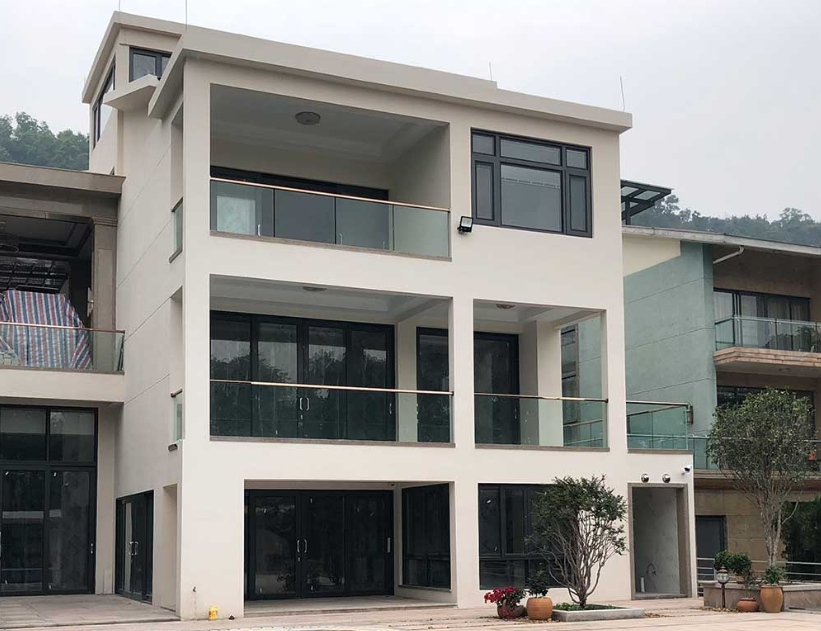
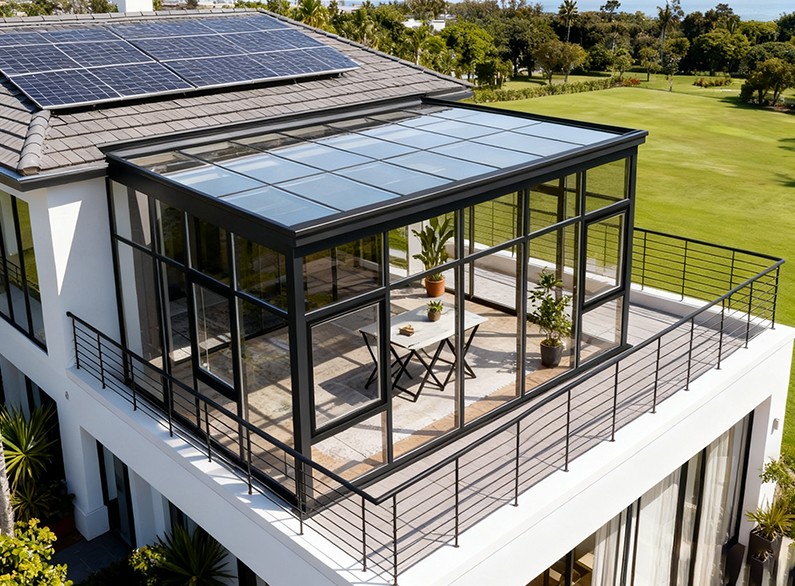
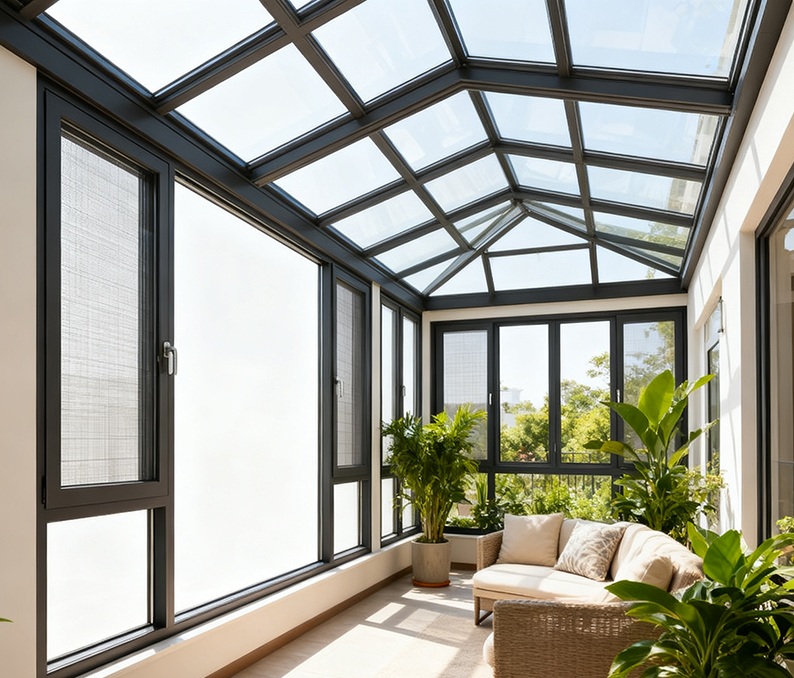
PAVIDA Sunroom of the villa

Functional Integration: Enhancing Year-Round Comfort with PAVIDA Products

A sunroom that cooks you in summer or freezes you in winter isn’t much fun. That’s why we add the pieces that actually keep the temperature pleasant.

Ventilation and Climate Control Features

Electric skylights open with a remote and let the hot air rise right out before it builds up. Crack a few side windows, and you get a nice breeze without losing the cool air from the AC.

Insulated Roofing and Smart Shades

The roof takes the biggest beating from the sun. We use sandwich panels—foam core with metal skins—so light comes in, but the heat stays out. Drop the electric shades on a July afternoon, and the room cools down fast.

Seamless Connection with Bi-Folding Doors

This is the part people love most. The PAVIDA 80 Series Thermal Break Heavy Duty Bi-Folding Door takes panels up to 200 kg each. Open them wide, and the whole wall folds away like an accordion—suddenly, the sunroom and the backyard are one big space for parties. Close them, and the thermal breaks plus insulated glass keep everything cozy again.

For tighter spots, we offer the Aluminum PD Minimalist Mute Ultra-Slim Folding Door. It works great in a small breakfast area that opens to the patio.

Security and Stability with Casement Windows

We mix in the PAVIDA 108 Series Double Thermal Break Aluminum Casement Window around the lower walls. Crank them open for fresh air, lock them, and the multi-point hardware bites the frame in several places. The built-in 304 stainless diamond mesh screen keeps bugs out and makes it a lot harder for anyone to break in.


PAVIDA 80 Series Thermal Break Heavy Duty Bi-Folding Door

Investment and Value: The Long-Term Perspective

Cost-Efficiency

Four-season rooms cost more at the start—sometimes thirty to fifty percent over a basic three-season setup. The difference pays off fast. Customers in cold areas say the heating savings cover the upgrade in five or six years. Folks in hot climates see the same thing on cooling bills.

Aesthetic and Resale Value

A sharp-looking sunroom adds real square footage you can count when you sell the house. PAVIDA rooms come out clean—slim sightlines, colors like matte black or wood-grain that match the rest of the place perfectly. We handle the whole job from the first drawing to the final wipe-down, so it looks like it grew there. Owners tell us it becomes the room everyone fights over, and real-estate agents say it’s the first thing buyers ask about.

Conclusion: Choosing Your Sanctuary

A three-season sunroom is okay if you just want a cheap spot for nice weekends. A PAVIDA four-season sunroom is a real living room with walls of glass—one you can use for morning coffee in January or dinner parties in August without breaking a sweat. With 6063-T5 aluminum, proper thermal breaks, 5+20A+5 insulated glass, and doors like the 80 Series that open the whole side of the house when you want, you get a bright, quiet, comfortable space twelve months a year. Pay a bit more now, enjoy it every single day for decades.

FAQ

Q: What is the main structural difference in insulation?

A: Four-season sunrooms have thermal-break aluminum profiles and double-glazed glass that stop heat from moving through the frame and panes. Three-season ones skip all that.

Q: What type of glass is used to ensure energy efficiency in PAVIDA sunrooms?

A: We fit 5+20A+5 double tempered insulated glass as standard, with Low-E coatings available when you want even better performance.

Q: Can PAVIDA folding doors enhance the sunroom experience during warm seasons?

A: Yes—the 80 Series Heavy Duty Bi-Folding Door opens the entire wall and makes the room feel twice as big on nice days.

Q: Are PAVIDA sunrooms suitable for cold-weather environments?

A: Absolutely. Thermal-break frames, insulated glass, and tight seals keep them comfortable even in deep winter. Plenty of owners add floor heating for extra coziness.

25th December 2025

Stylish Louvre Windows to Transform Any Space


The Modern Conundrum of Light, Air, and Privacy

People today want rooms full of daylight and fresh air that still feel private and stay cool. Most windows make that hard. You either pull thick curtains and lose the sunshine, or leave the glass bare and get glare, heat, and nosy neighbors.

The Challenge of Conventional Windows

Sliding windows only open halfway, so the breeze barely moves. Casement windows let in plenty of air, but they swing out wide and bump into chairs or plants. To hide from the street, most folks hang heavy blinds. Suddenly, the view is gone, and the room feels dark again.

Introducing the Elegant Solution: Aluminum Glass Louvre Windows

Aluminum Glass Louvre Windows fix the problem the old-fashioned way—rows of glass blades you tilt by hand or handle. Strong, light aluminum frames hold clear glass blades that never rust. Turn them a little for soft light and privacy. Open them wide for a real wind tunnel. Rain stays out even when the blades are partway open.

PAVIDA’s Aluminum Glass Louvres: Precision Engineering and Quality Foundation

PAVIDA builds aluminum doors, windows, and sunrooms that last and look sharp. The same factory care goes into every louvre window we ship.

Defining Features of PAVIDA Louvre Windows

The frames are tough aluminum alloy with a baked-on powder or fluorocarbon finish that keeps the color bright for years. The glass blades are strong and easy to see through. One turn of the handle moves every blade together, so you dial in exactly the light and air you want without opening the whole window.

PAVIDA: Specialists in Custom Aluminum Fenestration

PAVIDA mix solid Chinese building methods with German hardware from names like German HOPPE and SIEGENIA AUBI. From your first sketch to the day the windows go in, we handle the whole job so everything fits and works right.

Achieving Optimal Environmental Control and Aesthetic Flow

Flexible Management of Natural Light and Glare

On a bright morning, tilt the blades upward, and the sun hits the ceiling instead of your eyes or laptop screen. The room stays full of light but never blinding. Drop the blades halfway, and the clear glass turns into a soft wall—passers-by see only shadows while you still watch the garden.

Maximizing Ventilation and Promoting Airflow

Open the blades all the way, and the whole opening works as a vent. Hot cooking smells disappear in minutes. In a humid bathroom, the mirror clears fast. Families tell us they run the air-con far less once the louvres are fitted because fresh air does the job.

Enhanced Thermal and Acoustic Performance

Shut the blades and the window seals tight with the same thick profiles and rubber gaskets we use on regular windows. Add 5+20A+5 double-layer insulated tempered glass, and the room stays warm in winter, cool in summer, and quiet even when trucks roll past outside.


Aluminum Glass Louvre Windows for Marketing

Superior Durability and Custom Design

The Longevity of High-Grade Aluminum Alloy

Every frame starts as 6063-T5 aluminum alloy. It never rusts like steel and won’t rot or swell like wood. The powder-coated skin shrugs off sun, rain, and salt air near the ocean. After ten or fifteen years, the color still looks fresh, and the blades glide smoothly.

Low Maintenance, High-Performance Finish

Wipe the frames with a wet cloth now and then. That’s it. Rain keeps most of the glass clean. Pick the self-cleaning glass option, and even dust washes away with the next shower.

Tailoring Louvre Windows to Your Signature Style

Tell us the exact size, pick any RAL color or wood-grain finish, and choose matte black or champagne gold. For bathrooms, we fit frosted blades. For living rooms, most people keep clear glass so the view stays big and open.

Versatile Application Across Architectural Styles

Residential Comfort and Privacy

Homeowners put them in kitchens, laundries, verandas—anywhere fresh air matters. In sunrooms, they stop the place from turning into an oven on hot afternoons. Bedrooms stay private yet breezy, and the slim frames let in more light than bulky sliders ever could.

Commercial Efficiency and Architectural Appeal

Hotels fit them along café terraces so guests can turn the blades and get just the right breeze. Office towers use tall rows to pull air through naturally and cut power bills. Wherever you want clean lines and smart airflow, PAVIDA louvre windows work perfectly.


Aluminum Glass Louvre Windows for Office

Conclusion: Redefining Spaces with PAVIDA’s Vision

Louvre windows give you real control over light, air, and privacy in one good-looking package. PAVIDA builds them from proven 6063-T5 aluminum alloy with finishes that last and hardware that never lets you down. From first drawing to final fitting, we stay on the job, so you get windows that match your style, keep the house comfortable, and still look brand new years later.

If you are planning a new home, upgrading an existing space, or exploring better ventilation solutions, PAVIDA is ready to help. Contact us for custom designs, expert recommendations, and detailed project support. Let our aluminum louvre windows bring comfort, style, and long-lasting value to your property.

FAQ

Q: Which feature makes PAVIDA’s louvre windows energy efficient?

A: Tight seals, thick profiles, and the option of 5+20A+5 double-layer insulated tempered glass keep heat where it belongs and cut cooling costs.

Q: How is security maintained despite the opening mechanism?

A: Strong aluminum frames, tempered glass, and the same multi-point locks we use on our casement windows keep everything safe even when blades are open for air.

Q: What material ensures the frames resist corrosion and weather damage?

A: The frames are made from high-strength aluminum alloy (like 6063-T5) with long-lasting fluorocarbon or powder coating colors, which resist rust, decay, and harsh climates.

Q: Can the louvre windows be customized for specific aesthetic needs?

A: Yes. PAVIDA offers full custom sizes, any RAL color or wood-grain finish, and glass choices from clear to frosted or tinted.

19th December 2025

Explore Stylish Casement Window Types for Every Home


The Undisputed Champion of Window Performance

When people pick new windows, they usually want something that looks good, works well, and saves money on bills. Sliding windows save room, folding ones open wide for parties, but nothing beats a proper casement for real all-around performance. They keep the weather out, cut down noise, and stop heat from slipping away.

A casement window swings on side hinges just like a door. Shut it, and the whole frame presses hard against the rubber seals. That tight fit is the main reason casements leak far less air than sliders or most other types. Cold winds stay outside in winter, hot air stays out in summer, and road noise drops a lot.

Why Casement Windows Define Quality

Today’s casements are miles ahead of the old wooden ones. Builders now use strong aluminum frames with clever inside chambers and top-class German hardware. If you live somewhere windy or noisy, or you simply hate high power bills, a good casement with a thermal break is usually the first choice installers recommend.

PAVIDA: Specialists in Custom Aluminum Windows and Doors

PAVIDA makes and sells aluminum glass doors, windows, and sunrooms. We take old, proven ideas and mix them with the latest German hardware and building methods. From the first phone call to the day the job is finished, we aim to give personal service and solid, long-lasting products that don’t hurt the planet.

Understanding the Core Casement Window Types

Outward Opening: Maximizing Space and Breeze

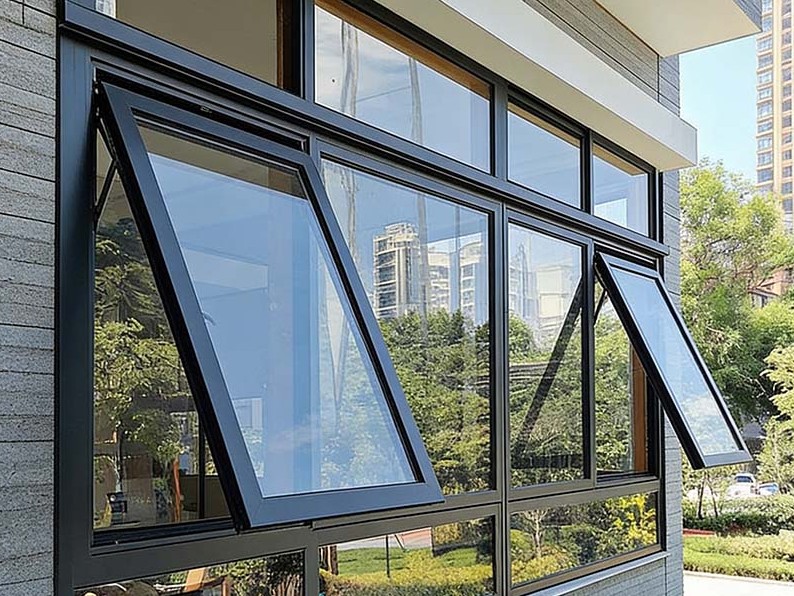
The sash pushes out into the garden or balcony.

  • Space Efficiency: Nothing swings into the room, so you can put a sofa or desk right under the sill—perfect for small flats or tight kitchens.
  • Superior Ventilation: Crank it fully open, and the whole glass panel catches the breeze like a sail. On a summer evening, you feel the air rush in straight away.

Inward Opening: Convenience for Interior Access and Cleaning

These swing into the room instead.

  • Maintenance: You clean both sides of the glass from inside the house. That’s a big help on the third or fourth floor, where ladders are a pain.
  • Consideration: Leave enough clear floor space because the open window does take up room indoors.

Inward Opening & Tilting (Tilt-and-Turn): The Versatile Hybrid

This is the type most families pick these days.

  • Dual Functionality: Turn the handle one way, and the window opens wide like a door for cleaning or big airflow. Turn it the other way, and the top tilts in a few inches.
  • Bad Weather Ventilation: On a rainy day, you can still get fresh air through the tilt gap without water blowing inside.


108 Series Double Thermal Break Casement Window for Kitchen

Engineering the Perfect Seal: Thermal and Acoustic Mastery

Superior Energy Efficiency Through Thermal Breaks

Plain aluminum carries heat fast, so PAVIDA puts a plastic strip—usually thick PA66—right through the middle of the frame. That strip stops the cold outside part from touching the warm inside part. Add several hollow chambers inside the profile, and heat has a very hard time getting through. Fit 5+20A+5 double-layer insulated tempered glass filled with argon gas, and many customers see their heating and cooling bills drop ten to twenty percent in the first year.

Unmatched Weather Tightness and Noise Reduction

Close a casement, and the sash gets pulled hard against the frame by the hinges and locks. PAVIDA adds several rows of EPDM rubber seals and hidden drainage channels with big holes so water runs away fast and never sits in the frame. The same thick glass and seals that keep heat in also knock road noise down by thirty decibels or more—enough to make a bedroom quiet even on a busy street.

Product Spotlight: PAVIDA’s High-Performance Casement Series

The 108 Series: Balancing Security and Comprehensive Insulation

The PAVIDA 108 Series uses thermal-break profiles and is the one we fit most often in living rooms and bedrooms.

  • Integrated Security: A tough 304 stainless steel diamond mesh screen slides or folds away when you don’t need it. It keeps flies out and makes burglars think twice.
  • Versatile Opening: You can have outward swing, inward swing, top-hung, or full tilt-and-turn on the same series.

The 128 Series Double Thermal Break: Peak Performance for Extreme Needs

When someone wants the very best, we fit the 128 Series. It has two thermal strips instead of one, plus extra chambers and six rows of seals. The difference is clear on the coldest nights or the hottest afternoons—the room temperature barely moves.

French Casements: Narrow Frames for Panoramic Luxury

These French Casements have very slim frames, so you see more glass and less metal. They look stunning, floor-to-ceiling in villas and still carry the full thermal-break treatment, PA66 strips, and insulated glass, so you don’t give up comfort for the view.


128 Series Double Thermal Break Aluminum Casement Window

Security and Longevity: The Aluminum Advantage

Multi-Point Locking Systems for Enhanced Home Security

Because the sash presses into the frame, casements are already hard to pry open. PAVIDA adds multi-point locks that hook in three or four places up the side. Tempered glass shatters into safe little pieces if something does hit it hard, and the steel mesh on the 108 Series adds another strong layer.

Durability and Low Maintenance: The 6063-T5 Aluminum Promise

Every frame starts life as 6063-T5 aluminum alloy—the grade the national standard calls for in top windows. It never rusts, never rots, and laughs at salt air near the coast. A baked-on powder coat keeps the color looking new for fifteen or twenty years. Wash it down with water and mild soap once or twice a year, and that’s all the care it needs.

Tailoring Your Windows: PAVIDA’s Customization Promise

Pick the exact size down to the millimeter, choose matte black, champagne gold, wood-grain effect, or any RAL color you like. Decide on clear, frosted, or tinted glass, single or triple glazing, and which way the window opens. We draw it, build it, deliver it, and help the fitters put it in.

Conclusion: Choosing Casement Windows for Lasting Value

A good casement window gives you strong seals, fresh air when you want it, quiet rooms, lower bills, and real security. PAVIDA builds them from proven 6063-T5 aluminum with German hardware and proper thermal breaks, so they stay beautiful and keep working year after year. Whether you need the everyday 108 Series for the kids’ rooms, the super-quiet 128 Series for a home office, or slim French casements to frame the view, there’s a casement that fits the job perfectly.

FAQ

Q: Which casement style offers the best ventilation when fully opened?

A: Outward-opening casement windows swing completely clear and catch side breezes best, giving the strongest airflow.

Q: What makes PAVIDA’s casement windows energy efficient?

A: Thermal-break profiles with PA66 strips, multi-cavity frames, and 5+20A+5 double-layer insulated tempered glass stop heat from moving through the window.

Q: Does PAVIDA provide integrated screens for mosquito and theft protection?

A: Yes—the 108 Series comes with built-in 304 stainless steel diamond mesh that keeps insects out and adds serious anti-theft strength.

Q: Are aluminum casement windows better than uPVC in terms of structural durability?

A: Yes. The 6063-T5 aluminum alloy PAVIDA uses is stronger, stays straighter, handles bigger glass areas, and lasts longer than uPVC without going brittle in the sun.

18th December 2025

Small Deck Upgrades That Make a Big Impact


For a lot of homeowners, the deck or patio serves as an extra living room outside, a spot for kicking back, having folks over, or just taking in the fresh air. But that link between inside and out usually seems broken up, cut off by regular swing doors or sliders that block easy movement and cut down the scenery. If you’re after a change that’s pretty straightforward but packs a real punch, zero in on the doorway tying your house to the backyard. Bi-fold doors can really boost your deck or patio setup, turning a plain wall into a flexible barrier that slides away and brings solid payoff down the road.

Reimagining the Indoor-Outdoor Divide

The standout thing about bi-fold doors is how they wipe out those building walls, giving a top-notch tie between inside rooms and the yard beyond.

Maximizing Usable Space Through Retraction

Old-style doors need plenty of room to swing, or they only crack open partway, but bi-fold doors focus on smart space use. The sections fold up snugly and pull back to one side, leaving the whole doorway wide open. That full pull-back clears out indoor mess and builds a smooth blend between house and yard. It’s extra handy for tight decks or patios where every bit of ground matters. Throw a big party or just sip coffee at dawn, and the free flow from a folding setup turns the spots into one big area.

The Ultimate Aesthetic Transformation

Bi-fold doors quickly lift your house’s style with a fresh, up-to-date vibe. Today’s home building trends push for wide-open feels, lots of sun, and straight views. PAVIDA’s aluminum folding doors come with skinny bars and clean edges, adding a sharp, modern touch anywhere. Plus, the big glass parts let sunlight stream in, lighting up rooms and cutting back on lamp use. Shut tight, the super-thin frames from PAVIDA widen what you see, tying the inside to the yard view and making spaces look bigger and friendlier.

PAVIDA’s Dedication to Quality and Innovation

A Legacy of Precision Craftsmanship

PAVIDA’s push for top work shows in the made-to-order options we give. We build items with fresh tech so each aluminum door fits your needs spot-on, from what it’s used for to how big it is and what it looks like. We pick strong 6063-T5 aluminum alloy that fights off rust, rot, and rough weather on its own, lasting ages. Toughness gets a boost from good powder-coated frames that hold up against sun bleaching and need little upkeep, with choices like matte black, champagne gold, or wood grain.

Advanced Thermal Break Technology for All-Season Comfort

A key trait setting apart decent bi-fold doors is how well they handle heat, keeping the open area comfy all year. PAVIDA works thermal break tech into its folding door builds. Those stops in the aluminum frames cut down heat movement a ton, holding room temps steady – cozy in cold months and chill in hot ones. Our folding door systems utilize double-glazed glass and multiple sealing strips, achieving both strong thermal insulation and sound blocking. This setup slashes heat loss and trims cooling costs, turning the area pretty and cheap to run.


80 Series Thermal Break Heavy Duty Bi-Folding Door

PAVIDA offers specific folding door models tailored to different architectural needs, whether you need a massive span for a villa or a clever solution for a small balcony.

The Heavy-Duty Powerhouse: 80 Series Thermal Break Bi-Folding Door 

Built for really big openings like wide patios or backyard walls, the 80 Series Thermal Break Heavy Duty Bi-Folding Door can take serious weight. Each panel hangs on hardware rated for up to 200 kg, so even tall, heavy doors glide without sagging. It has a proper thermal break and plenty of weather seals that keep the cold out in winter and the heat out in summer, while cutting down street noise too. The frames join at crisp 45-degree angles, giving it a solid, good-looking finish that feels sturdy the moment you touch it.

Seamless Views and Flexibility: 75 Series Aluminum Bi-Folding Glass Door 

The 75 Series Aluminum Bi-Folding Glass Door hits the sweet spot for most homes. At 75 mm thick, the profiles still look light instead of chunky, yet they easily carry 120–180 kg per panel. You can span 3 to 6 meters and get a clean wall of glass when it’s shut. Open it up and everything folds flat to both sides, leaving the view wide open for living rooms that spill straight into the garden. Insulation and soundproofing stay strong the whole time.

Ultra-Slim Design for Compact Areas: Aluminum PD Minimalist Mute Folding Door 

When space is tight—think kitchen counters that open to a small balcony—the Aluminum PD Minimalist Mute Ultra-Slim Folding Door works perfectly. The frames are super skinny, so you see more glass and less metal. Fold the panels, and they barely stick out, giving you almost the full opening back. It looks clean and modern, no matter what style your place has, and you can order it cut to the exact size you need.


Aluminum PD Minimalist Mute Ultra-Slim Folding Door

Practical Benefits for Enhanced Daily Living

Picking PAVIDA’s folding doors means putting money into strong traits that bump up safety and ease.

Superior Security and Long-Term Durability

Safety sits at the core of PAVIDA’s build ideas. Every folding door model packs multi-point locks as standard, grabbing the frame in a few places to make busting in way tougher. Plus, the kits use beefy aluminum bars and sturdy, safe glass that stands up to hits and break-ins. Our tough powder-coated aluminum frames aim for easy care; a wipe with water and light soap often keeps the look going strong for years.

Bespoke Customization to Match Your Style

PAVIDA shines at giving wide custom work to make sure the folding door kit fits your house look dead-on. Dial in sizes down to the millimeter for a spot-on match. Colors run from matte black, white, silver, or any RAL tone. Pick special glass setups too, like triple layers for better heat hold or shaded/frosty panes for private spots. We throw in a preview tool to check that the end result lines up with your decor plan.

Conclusion: Your Seamless Indoor-Outdoor Future

That little-seeming choice to swap your patio door for a PAVIDA aluminum folding system sparks a shift that hits hard. Mixing high-tech stuff – like the heat smarts in the 80 Series Thermal Break Heavy Duty Bi-Folding Door – with classy, tweakable looks, PAVIDA hands over top worth, toughness, and a true yard tie-in. Need a wide stretch for parties or a skinny fix for tight balconies? PAVIDA nails it. Time to quit seeing the deck as a part and dive into a blended home setup.

FAQ

Q: Are PAVIDA aluminum folding doors energy efficient?

A: Yes, all folding door types integrate thermal break technology and support double or triple-insulated glazing options to minimize heat transfer and reduce energy consumption.

Q: How secure are PAVIDA aluminium folding doors?

A: Our folding door kits come standard with multi-point locking systems and are built with high-power aluminum bars and tough, safe glass to provide reliable anti-theft features.

Q: Can I customize the folding door dimensions and color?

A: Absolutely. PAVIDA offers full customization options, including specific dimensions, glass configurations, color finishes such as matte black or wood grain, and hardware designs.

Q: Are folding doors suitable for diverse climates, such as coastal areas?

A: Yes, all PAVIDA folding door systems are designed for diverse climates—from coastal to high-altitude environments—ensuring excellent sealing and corrosion resistance due to the durable powder-coated aluminum.

12th December 2025

Easy Fixes for Sliding Window Issues at Home


Sliding windows show up in most new houses these days because they don’t eat up floor space and they let you see the whole backyard without craning your neck. Give it a couple of years of rain, kids, dogs, and plain old dust, and suddenly that window fights you every morning when you want some fresh air. If yours sticks halfway, bangs in the wind, or turns the living room into a wind tunnel in January, you already know the usual headaches. The bright side is a lot of these problems can be knocked out with stuff you probably have in the garage right now. The even brighter side? When you’re sick of babying cheap windows, there’s hardware that simply doesn’t have these problems.

The Frustration of Faulty Sliding Windows

When Smooth Operation Stops: Identifying Common Causes

There’s nothing quite like the light push a good sliding window needs. When that easy glide turns into a wrestling match, something is wrong. Nine times out of ten it’s dirt packed in the track, rollers that have gone flat, or the whole sash has sagged a little out of square. Let those slide and you’re looking at cracked corners, foggy glass, cold rooms, and a heating bill that makes you cry.

Why Quick Fixes Often Aren’t Enough

Wiping the track and squirting some spray lube will usually buy you another season or two. Trouble is, cheap plastic rollers still collapse, and plain aluminum frames still suck heat out of the house like a straw. If you’re the type who wants to install windows once and forget about them for the next fifteen years, the only real cure is to swap them out for something that was built properly in the first place. That’s exactly what a solid system like PAVIDA gives you.

PAVIDA, an integrated enterprise specializing in aluminum windows, doors, and sunrooms, develops custom products using innovative technology.

Common Sliding Window Problems and Quick DIY Solutions

Three things drive people nuts: the window won’t budge, cold air sneaks in, and the thing rattles or sounds like a train is coming through. Fix those three and life gets a lot quieter.

Problem 1: Sticking, Dragging, and Difficulty Opening

You lean into it, give it a shoulder, and it still only moves an inch. Blame the track or the rollers—almost always one or the other.

Those little channels collect more crud than you’d believe—sand from the beach trip you took last summer, dead bugs, pine needles. Grab a vacuum and an old toothbrush, dig it all out, then wipe the metal rail with a rag. A quick shot of dry silicone spray (the kind that doesn’t attract more dirt) and most windows go back to sliding like the day they were installed.

PAVIDA aluminum sliding windows are put together so they stay easy to move year after year. The PAVIDA 120 series (Aluminum Alloy Soundproof Glass Sliding Window with Mesh) runs on stainless steel tracks and heavy-duty rollers that hardly make a peep. The track sits up high enough that yard debris doesn’t pile in as fast, and when you do wipe it down, plain water does the job.


120 Soundproof Glass Sliding Window with Mesh

Problem 2: Drafts, Leaks, and High Energy Bills

You’re sitting watching TV and your feet are freezing even though the heat is on. That’s the window telling you it’s time to do something.

Hold a lighter or a stick of incense around the edges on a windy day—anyplace the flame dances, air is getting through. Old rubber seals get hard and cracked. Pull the old stuff out with a flat screwdriver and press new pile or fin seal in its place. Twenty bucks at the big-box store and an hour of your Saturday usually stops the whistle.

PAVIDA puts a real thermal break inside every frame—a strip of polyamide that cuts the metal-to-metal path cold. Add the 5+12Argon+5mm double tempered glazing in the 120 Sliding Window Series and heat just doesn’t travel through the way it does on ordinary aluminum. Multiple rows of EPDM gaskets keep doing their job season after season without drying out or shrinking.

Problem 3: Rattling, Noise Pollution, and Security Concerns

Every time a delivery truck rolls by the glass shakes like it wants to jump out. That loose feeling also makes you wonder how safe the house really is.

A lot of times just snugging up the screws on the lock keeper or turning the cam a click or two pulls everything tight again. Takes thirty seconds and quiets things down right away.

PAVIDA fits the Series 120 with locks that grab the frame in three or four places instead of one cheap latch in the middle. Good luck prying that open. There are also anti-lift blocks so even if somebody smashes the glass they still can’t pop the panel out of the track. Go with the laminated acoustic option and you can actually hear yourself think again.

PAVIDA: Designing Windows to Eliminate Common Flaws

We take what works from everyday Chinese building practices and marry it to German hardware that’s been proven for decades—HOPPE handles, SIEGENIA rollers and locks. The result is windows that don’t just look good on day one; they stay that way.

PAVIDA 120 Series: Stability and Silence Engineered

A 120 mm deep frame might sound like engineer talk, but it just means the window laughs at hurricane gusts while thinner profiles start twisting and leaking.

We use 6063-T5 aluminium alloy all day long because it doesn’t rust or rot. Corners get steel reinforcement plates and the profiles have several hollow chambers, so the whole thing stays square for decades.


6063-T5 aluminium alloy for windows

Durability and Customization for Any Home

A good powder-coat or anodized finish shrugs off salt spray, acid rain, or blazing sun without peeling or chalking. Old house with weird openings? We cut to the exact millimeter. Want black today and bronze tomorrow? Pick any RAL color or a wood-look foil that fools everybody. Need extra safety glass for the kids’ playroom? Done.

In conclusion, scrubbing tracks and sticking new foam on once a year will keep a cheap window limping along. Put in a properly built aluminum system like the PAVIDA 120 series and you’re done worrying. You get slim looks, tough 6063-T5 alloy, real thermal performance, and locks that actually lock—turning a daily headache into something you never think about again except when the utility bill comes and you smile.

FAQ

Q: Do PAVIDA aluminum sliding windows really save on power bills?

A: Yes, with thermal break frames, double-tempered glazing, and EPDM gaskets, PAVIDA sliding windows minimize heat loss and keep your home energy-efficient.

Q: How much work is it to keep the tracks sliding smooth on these windows?

A: Hardly any. The stainless steel tracks on the Series 120 sit a little proud of the sill, so leaves and grit don’t pack in the way they do on cheaper windows.

Q: I live two blocks from a busy road—will these cut the traffic noise?

A: Absolutely, the Series 120 offers laminated acoustic glass and tight seals that significantly reduce outside noise, giving you a quieter indoor environment.

Q: How tough are the locks on PAVIDA sliding windows?

A: The multi-point locks grab the frame top, bottom, and middle, and the anti-lift blocks mean the panel can’t be jimmied out even if the glass gets smashed.

11th December 2025
Home
WhatsApp
Email
       
Contacts