






22nd May 2026
When planning a modern home or business building, people often focus on windows mainly for their looks. Yet, these windows serve as the biggest pathway for heat movement in any structure’s outer layer. Regular clear glass lets in infrared heat and UV light easily, which makes cooling systems run much harder. At PAVIDA, we push for a better option: Low-Emissivity (Low-E) glass. The starting price is a bit more than basic glass, but the running costs drop so much that the extra spend usually covers itself in only 24 months.
The Technical Edge of Low-E Glass: Microscopic Coatings, Massive Results
The key strength of Low-E comes from its power to cut down heat transfer by radiation. Normal glass soaks up heat and sends it inside the room. On the other hand, PAVIDA’s Low-E options send that heat right back where it came from.
- Summer Performance: It stops up to 70% of solar heat gain.
- Winter Performance: It keeps indoor warmth by sending furnace heat back into the space.
- UV Protection: It blocks harmful ultraviolet rays, which stops fading on costly furniture, floors, and art pieces.
How it works in PAVIDA’s System: Combining Low-E with Argon Gas
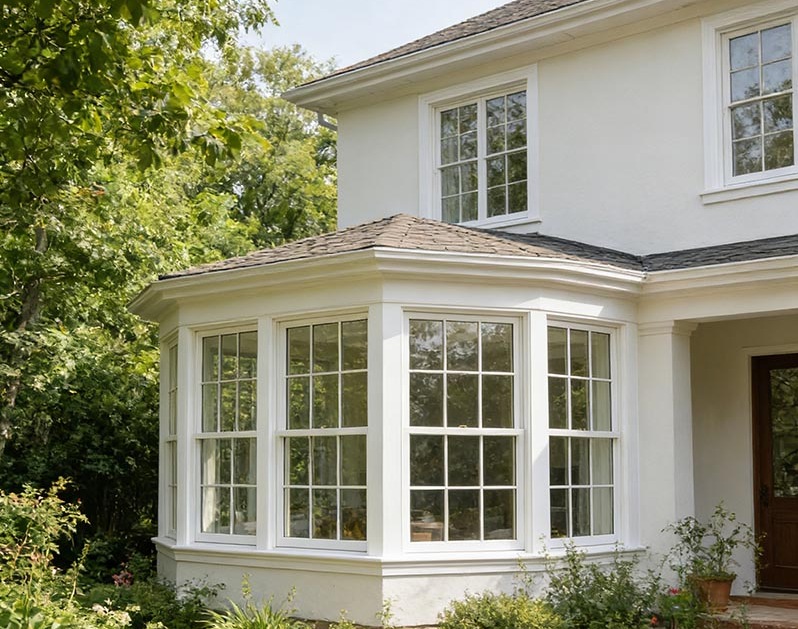
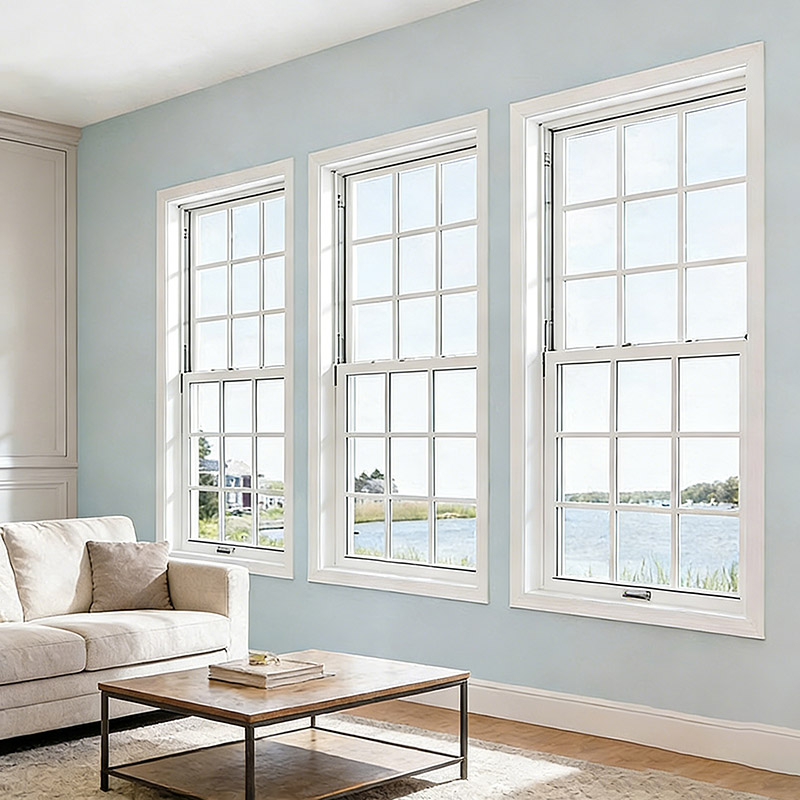
We go further than just the layer. In our top units, such as the Thermal Break American Style Aluminum Double Hung Windows, we apply double-glazing (IGU) methods. We fill the gap between the Low-E pane and the regular one with Argon gas. This heavy gas acts denser than regular air, adding another barrier against heat that sharply reduces the window’s U-value.
The Financial Breakdown: Low-E vs. Standard Glass
Many builders and house owners worry first about the added cost for eco-friendly choices. Still, a side-by-side review shows that basic glass ends up costing more over five years.
Short-term Costs vs. Long-term Savings
Basic glass windows might cut the upfront price by 10-15%. However, they create a building that loses heat easily. In hot tropical spots or places with tough winters, this causes several issues.
- Higher HVAC Capacity Requirements: You end up needing bigger, pricier AC units to fight the incoming heat.
- Increased Monthly Bills: Electricity expenses can rise by 30% with regular glass.
- Maintenance Costs: Overloaded HVAC setups break down sooner, bringing early fix-up bills.
The 2-Year Payback Period: Real-world HVAC data
From our work in areas like Australia and Southeast Asia, switching to PAVIDA’s Low-E thermal break setups cuts energy use by about 25-35%. For a typical 2,000 sq. ft. home, the total savings from utility bills often match the extra cost of Low-E over standard glass in two years. After that, any further reductions turn into clear gains for the owner.
Application Scenarios: PAVIDA Solutions in Action
To show the real effects of built-in heat control tech, consider how we use these ideas in our main product ranges.
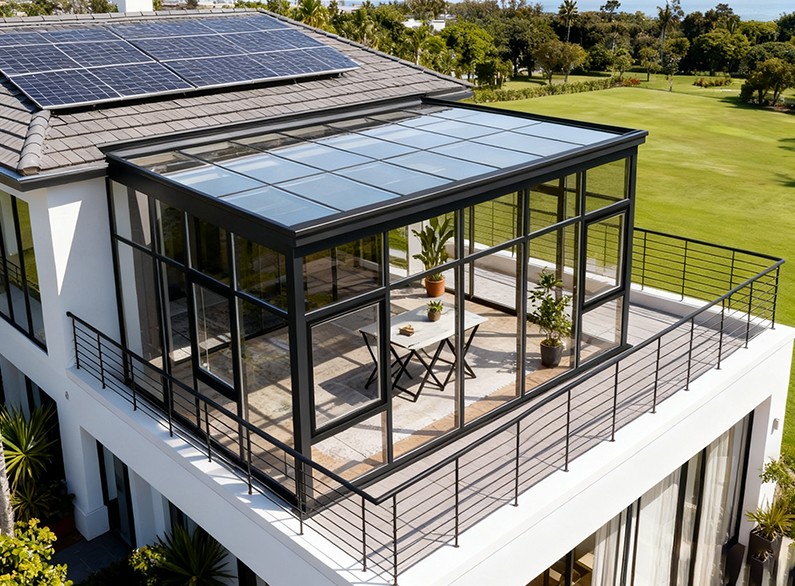
Energy-Efficient Living: The Customizable Aluminum Glass Sunroom
Sunrooms prove hard to keep at a steady temperature. A regular glass sunroom turns into a hot trap during summer.
- The PAVIDA Solution: Our Customizable Aluminum Glass Sunroomuses strong 6063-T5 aluminum frames with Low-E safety tempered glass.
- The Result: Owners get wide views and daylight without overwhelming warmth. It changes a room for just one season into a full-time addition that boosts living space without huge energy jumps.
High-Rise Comfort: 128 Series Thermal Break Casement Windows
In tall apartment buildings, wind force and noise blocking matter as much as heat control.
- The PAVIDA Solution: Our 128 Series Double Thermal Break Aluminum Casement Windowincludes thicker PA66 thermal insulation strips.
- The Result: Adding Low-E glass to this multi-part design fixes the “cold bridge” problem. In city settings, this setup not only lowers heating bills but also offers strong noise reduction, making a calm, even-temperature area even near loud roads.
Minimalist Performance: 4516 Series Slim Sliding Doors
Current building styles call for thin frames, but slim ones often lack good insulation.
- The PAVIDA Solution: The 4516 Series Minimalist Design Aluminum Sliding Door has a frame just 40mm wide.
- The Result: We rely on tough aluminum alloy to hold big Low-E glass sheets. This creates a smooth shift from inside to outside in high-end homes and flats. The Low-E layer makes sure that even with large glass areas, the inside stays comfortable, balancing clear sightlines with solid heat control.
Why PAVIDA is the Strategic Choice for Global Projects
As a maker in Foshan, China, with more than 12 years of know-how, PAVIDA offers a full-service package that connects top engineering with affordable making.
Manufacturing Excellence and AS2047 Certification
Our 4,000-square-meter plant has modern CNC tools for exact cuts every time. We have met the strict Australian Standard AS2047 tests. This covers checks for water leaks, air leaks, and full strength in bad weather. Picking PAVIDA means getting items built for the toughest conditions around the world.
Tailored Engineering Services: From Drawing to Delivery
We know each job differs. Our help extends past just building:
- Custom Design: We review your CAD files to find the right build fit for your structure’s direction.
- Material Matching: We give solid tips on glass thickness and Low-E layer types (Single, Double, or Triple Silver) suited to your area’s weather.
- Logistics Support: From careful packing to worldwide shipping, we make sure your strong glass reaches the site set for fitting.
Final Thoughts
Going with basic glass saves money at first, but drains funds over time. By choosing PAVIDA’s Low-E aluminum systems, you guard your building’s worth, provide steady comfort, and reach return goals in only two years.
Ready to improve your next project’s energy use?
Reach out to the PAVIDA now for a detailed quote and a personal look at your plans. Let us guide you to build wisely, not just on a larger scale.
- WhatsApp: +86 18125772267
- Email: pavidaco@gmail.com
FAQ
Q: Does Low-E glass look different from standard clear glass?
A: Good Low-E glass looks almost the same as clear glass to the eye. It keeps a strong light passage, so your sights stay bright and true while the hidden layer handles heat reflection.
Q: Can I use Low-E glass in any window frame?
A: It works in many cases, but pairs best with Thermal Break aluminum frames. Without that break, the frame conducts heat anyway, which weakens the savings from the Low-E glass.
Q: Is Low-E glass more prone to scratching or damage?
A: No. In double-glazed setups, the Low-E layer sits on the inner side of the panes. This shields it from outside wear, cleaners, and scrapes, so it holds up as long as the window does.
Q: How do I know if my windows actually have a Low-E coating?
A: Trusted providers like PAVIDA supply proof tags. A quick “match test” works too: place a flame by the glass; in a double-glazed Low-E unit, one of the four flame images in reflection shows a different hue (often pink or purple) from the rest.


Leave a reply