







1st Октябрь 2026
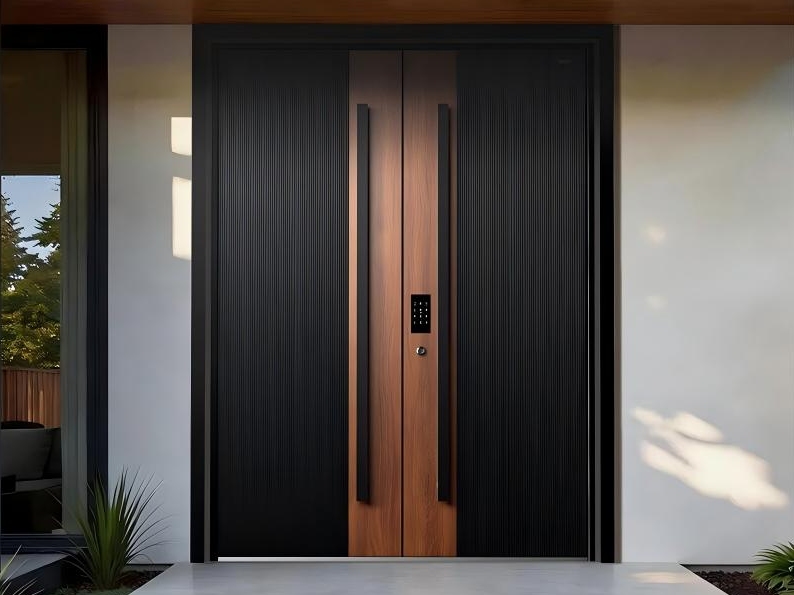
The main entrance of any property serves as the focal point of its exterior design while standing as the primary boundary between indoor climate control and outdoor weather conditions. Upgrading an aging or drafty entryway can improve curb appeal, thermal comfort, and building-envelope performance. As a specialized global aluminum front door manufacturer, ПАВИДА delivers factory-direct custom aluminum front door solutions designed to maximize thermal performance and architectural distinction.
Analyzing Front Door Replacement ROI and Property Value
Evaluating an entryway upgrade requires balancing initial installation costs against long-term financial equity and exterior appeal. A strong front door replacement ROI depends on the quality of the new door, installation, thermal performance, and its contribution to overall property presentation.
Financial Returns and Enhanced Front Door Resale Value
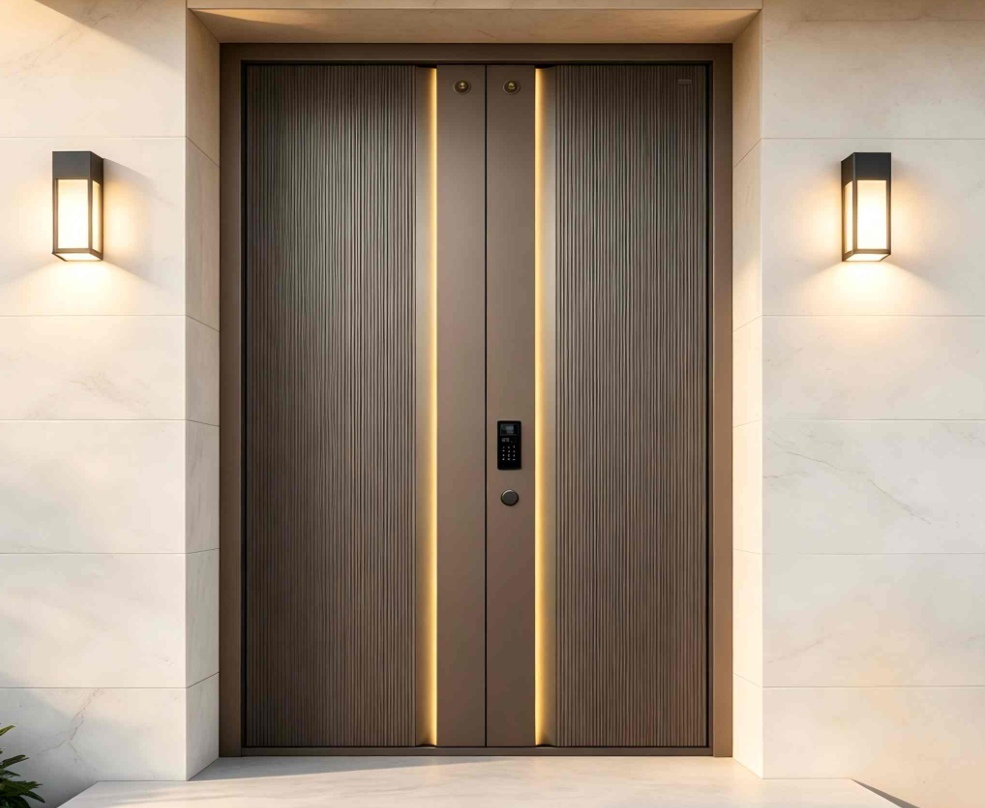
Investing in modern entrance upgrades can directly influence property market evaluation and buyer perception.
- High Capital Recoupment: Achieving a strong front door replacement ROI stems from immediate improvements in curb appeal and building-envelope perception during property appraisals.
- Resale Value Elevation: For homeowners asking, does a new front door add value, an upgraded entrance can strengthen buyer perception and contribute to improved front door resale value.
- Minimal Upkeep Expenses: Powder-coated exterior finishes eliminate the frequent repainting, sealing, and anti-rust treatments required by traditional timber or steel doors.
Balancing Front Door Replacement Cost and Lifetime Returns
Calculating total project value requires looking beyond initial product prices to evaluate long-term structural durability and energy performance.
- Comprehensive Financial Calculation: Buyers evaluating front door replacement cost should weigh hardware durability, thermal break engineering, weatherproofing quality, and installation rather than comparing door-only quotations.
- Long-Term Structural Equity: An insulated aluminum front door resists warping, rotting, and seasonal sagging, providing decades of reliable operation without structural breakdown.
These factors help determine the true entry door replacement ROI over the service life of the entrance system.
The Science of Energy Efficiency and Cost Reduction
Entryways can contribute to building energy loss, directly affecting indoor comfort and HVAC workload across both summer and winter seasons. Improving an energy-efficient front door requires controlling both air infiltration and conductive heat transfer.
Mitigating Front Door Heat Loss and Air Leakage
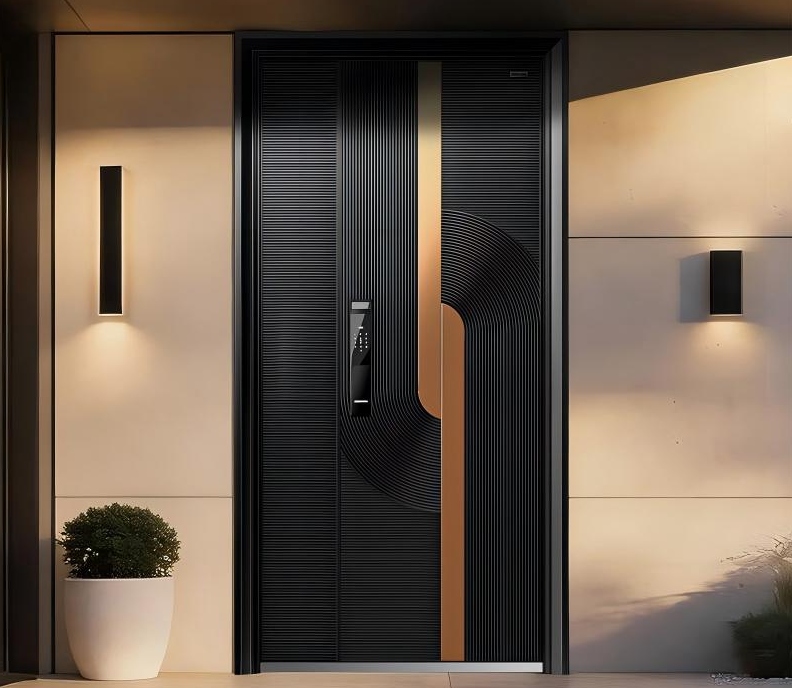
Stopping unwanted energy migration is essential for maintaining consistent indoor temperature control.
- Conductive Barrier Integration: Uninsulated metal frames create conductive thermal bridges that draw heat outward during winter months, increasing front door heat loss.
- Draft Elimination: Multi-channel weather-stripping minimizes front door air leakage, preventing cold floor-level drafts near interior living zones.
Reducing both front door heat loss and front door air leakage is fundamental to improving entrance-system efficiency.
Understanding Front Door U-Factor and HVAC Savings
Technical entrance ratings help indicate how effectively a door assembly limits thermal transfer under changing weather conditions.
- Low U-Factor Performance: Achieving a low front door U-factor helps reduce heat transfer through the entrance assembly during hot summers and cold winters.
- HVAC Workload Reduction: Installing an energy-efficient front door can reduce heating and cooling demand, supporting long-term front door energy savings over the lifecycle of the building.
Advanced Thermal Break Engineering for Modern Entrances
Modern architectural entrance systems combine structural aluminum strength with continuous thermal isolation technology. A thermal break front door uses non-conductive materials to interrupt thermal bridging and preserve interior climate stability.
High-Performance PA66 Insulating Technology
Advanced internal profile geometry physically separates interior and exterior metal extrusions.
- PA66 Thermal Break: High-density PA66 nylon insulating strips join aluminum extrusions while reducing conductive heat migration through the frame of a thermal break aluminum front door.
- Polyamide Thermal Barrier: A continuous polyamide thermal barrier helps keep interior frame surface temperatures more stable across seasonal temperature changes.
- Multi-Chamber Cavities: Internal dead-air chambers within the profile act as insulating buffers that restrict convective thermal movement.
Together, these features allow a thermal break front door to provide better thermal isolation than a continuous metal frame.
Precision Sealing and Premium Material Integration
Component selection determines how well an insulated aluminum front door resists moisture, drafts, and acoustic transfer.
- EPDM Compression Gaskets: Multi-layer EPDM weatherstripping gaskets compress tightly along frame stops to seal out severe rainwater and wind-driven drafts.
- Low-E Glass Integration: Incorporating double- or triple-glazed Low-E glass entry door panels reflects infrared energy back to its source while permitting natural light transmission.
- Hardware Security Integration: Precision multi-point hardware systems from HOPPE, SIEGENIA, and ROTO provide structural locking tightness and operational ease.
Practical Applications and High-Impact Project Solutions
A custom aluminum front door can solve specific performance challenges across different architectural styles and climate zones. Tailored systems help protect building envelopes against coastal winds, UV exposure, moisture, and heavy architectural loads.
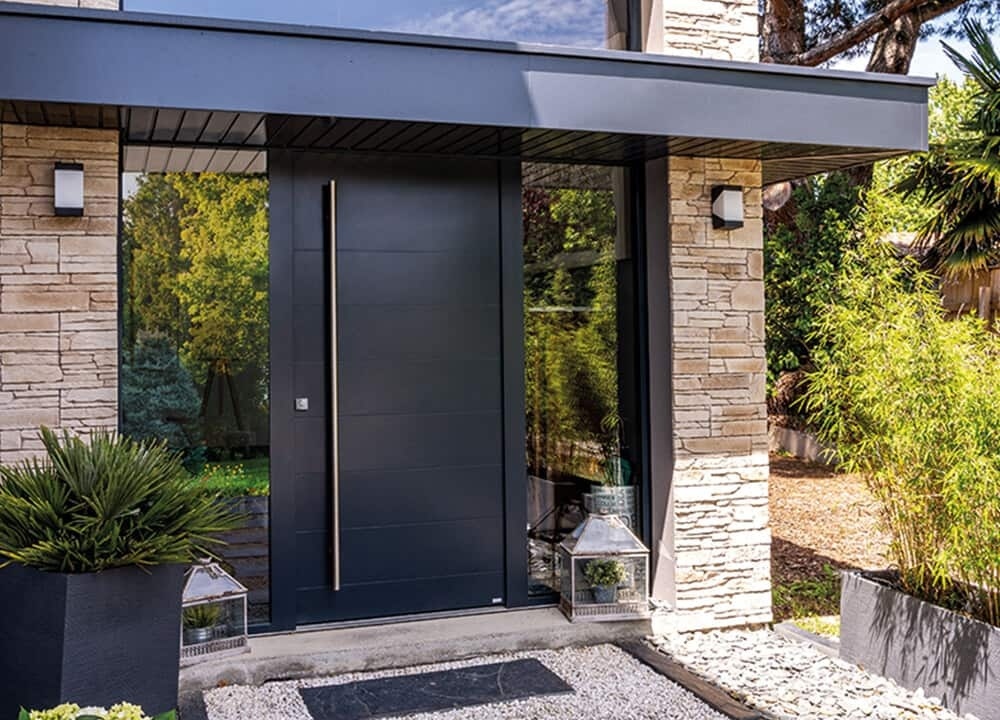
Coastal Villa Resilience and High-Humidity Protection
Seaside structures demand specialized alloy composition to resist rust and wind-borne moisture.
- Corrosion-Resistant Alloys: Utilizing 6063-T5 virgin aluminum alloy ensures structural integrity and high humidity resistance in oceanfront villas.
- Moisture Protection: Keeping interior surface temperatures above the dew point prevents glass condensation, protecting interior finishes from humidity damage.
For these environments, a thermal-break aluminum front door combines corrosion-resistant aluminum with improved thermal isolation.
Luxury Estate Entrances and Custom Architectural Designs
Oversized entryways require robust engineering to maintain thermal integrity across custom dimensions.
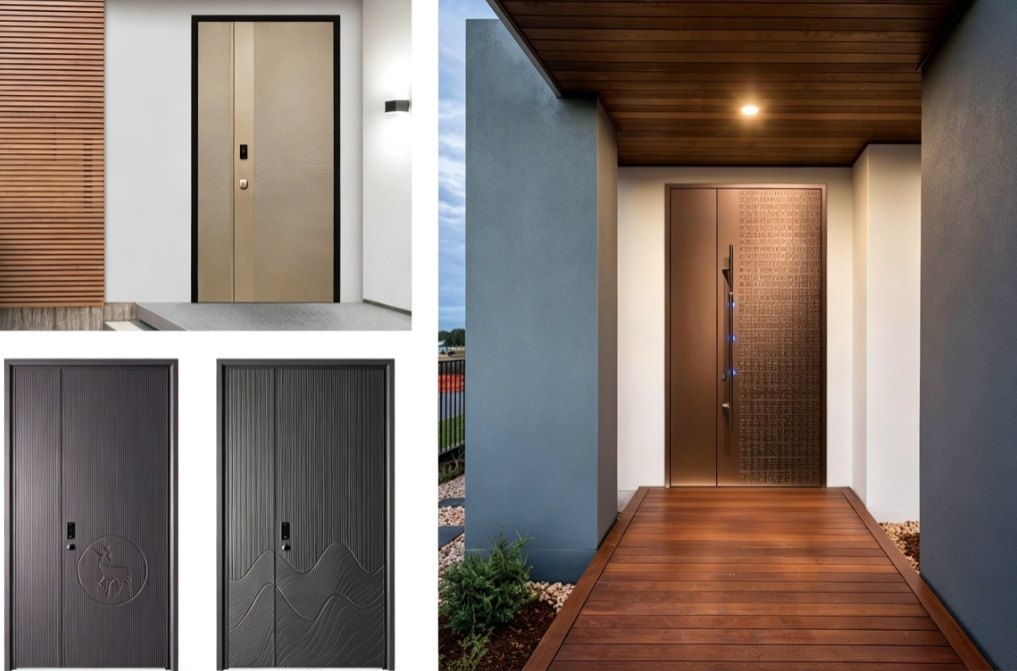
- Cast Aluminum Security Front Door: Engineered from solid cast aluminum, PAVIDA’s Cast Aluminum Security Front Door features anti-prying strength, high impact resistance, UV durability, and customized textures suited for high-security villa entrances.
- Custom Pivot & Carved Door Series: Heavy-duty structural pivot hinges support oversized thermal break aluminum front door configurations and Carved Door Series panels without compromising thermal isolation.
Elevating Project Success with PAVIDA Engineering
Selecting an experienced aluminum front door manufacturer ensures seamless execution from design drawings through final installation. Technical manufacturing capabilities turn complex concepts into energy-efficient entryways.
Custom Manufacturing and Full Technical Services
Integrated technical support streamlines custom residential and commercial projects.
- Tailored CAD Engineering: Engineering teams prepare detailed CAD drawings to support precise installation across non-standard rough openings and double-leaf layouts.
- End-to-End Support: Structural engineers assist architects and builders from dimensional verification through specialized hardware and automation selection for each custom aluminum front door project.
Upgrade Your Building Envelope with PAVIDA
Elevate your architectural project with high-efficiency entrance solutions designed to improve front door energy savings, architectural appeal, and long-term property value. Свяжитесь с PAVIDA сегодня to request custom CAD drawings, explore bespoke entrance designs, and receive tailored factory-direct project quotes for your next build.
Часто задаваемые вопросы
Q: What is a PA66 thermal break in a thermal break front door?
A: A PA66 thermal break is a high-density polyamide nylon strip placed between exterior and interior aluminum profiles. In a thermal break front door, it interrupts conductive heat transfer and improves the thermal performance of the aluminum frame.
Q: How does a low front door U-factor reduce monthly HVAC energy costs?
A: A lower front door U-factor indicates reduced heat transfer through the door assembly. This can help limit summer heat gain and winter front door heat loss, reducing HVAC workload and supporting long-term front door energy savings.
Q: Does replacing a front door significantly increase overall property value?
A: When asking whether a new front door adds value, factors such as curb appeal, condition, thermal performance, and installation quality all matter. A well-designed replacement can contribute to stronger front door resale value and improve overall entry door replacement ROI.
Q: Why is a thermal break aluminum front door preferred over wood or steel for coastal properties?
A: High-grade 6063-T5 aluminum alloy offers strong corrosion resistance against salt fog and moisture. When combined with a thermal break, an insulated aluminum front door also helps reduce conductive heat transfer while avoiding the rusting or warping issues associated with some traditional materials.



Оставить ответ